
July 2026 Quarterly Newsletter
Members Only! This newsletter is just for our members. Please do not share, copy, or publish it anywhere else. Thank you for respecting our community!
All quarterly newsletters and AGM notices will come from a variation of communications(number)@nchenz.org.nz for example communications1@nchenz.org.nz it is a good idea to register the address @nchenz.org.nz as a safe sender as all contact from us comes from variations of this address.
Contents:
Visit the private members-only area of our website
BOOKMARK THIS LINK!
You can only access this section of the website through this members only link, so it is best to bookmark it for future access.
Programs and Discounts for 2026
We have renamed our Members Offers to Programs and Discounts to help reduce the confusion between Members Offers and memberships also so the name better describes itself for new people joining NCHENZ.
Access discounts that are usually reserved for schools, available only to our members.
BEAST ACADEMY
STARTS 18th JULY
FOR AGES 5-13 approx. There are only 10 subscriptions still available. This year we have moved to subscription codes - which means that YOU are in full control!! The popular Beast Academy Books are included in this online subscription as a download and print.
For more info & to enrol click here
IXL
For those who love IXL our Affiliate program discount has been reactivated - Click here for more information
OTHER
There are programs available for enrolment year round. Click here to access details for these.
When programmes are due for renewal Gin will email you from that programmes email address while all the emails are different they all end with @nchenz.org.nz so it is best to save this as a safe sender to ensure your emails don't get sent to spam.
OPT in to a Monthly Email to your Inbox
Information about Programs and Discounts is now only posted on the private, members only Facebook group and in our monthly notices email. If you are not a member of the Programs & Discounts Facebook group, we highly recommend you subscribe to our monthly notices email. All members receive this quarterly update, however the monthly email is OPT-IN only. Email memberships@nchenz.org.nz or click this link and send.
Otherwise, keep up-to-date in our three private members-only Facebook groups: Our general one; Navigating Through Highschool & Beyond; and Programs & Discounts

Homeschooling Wins
This article was printed in the Timaru Courier (Click here for link). It is about a New Zealand girl Faith Shaw who is the fourth of six children all of whom have homeschooled, and is fundraising to help her attend her second year at the world-renowned Vaganova Ballet Academy in St Petersburg, Russia.
Whilst the specific high tea fundraising event in the news article has passed, they are still fundraising via other events and donations.
“Faith is the only NZ girl to train full time at Vaganova and she is truly loving it despite the language barrier and 6 day a week regime.”
“She’s proven herself, she’s already completed a year and we know that she loves it. She is made for it, it’s her destiny.”
For those in South Canterbury, there is a performance August 15 and a dessert evening August 22nd.
You can get info and organise personal donations via louiseshawwriter@gmail.com


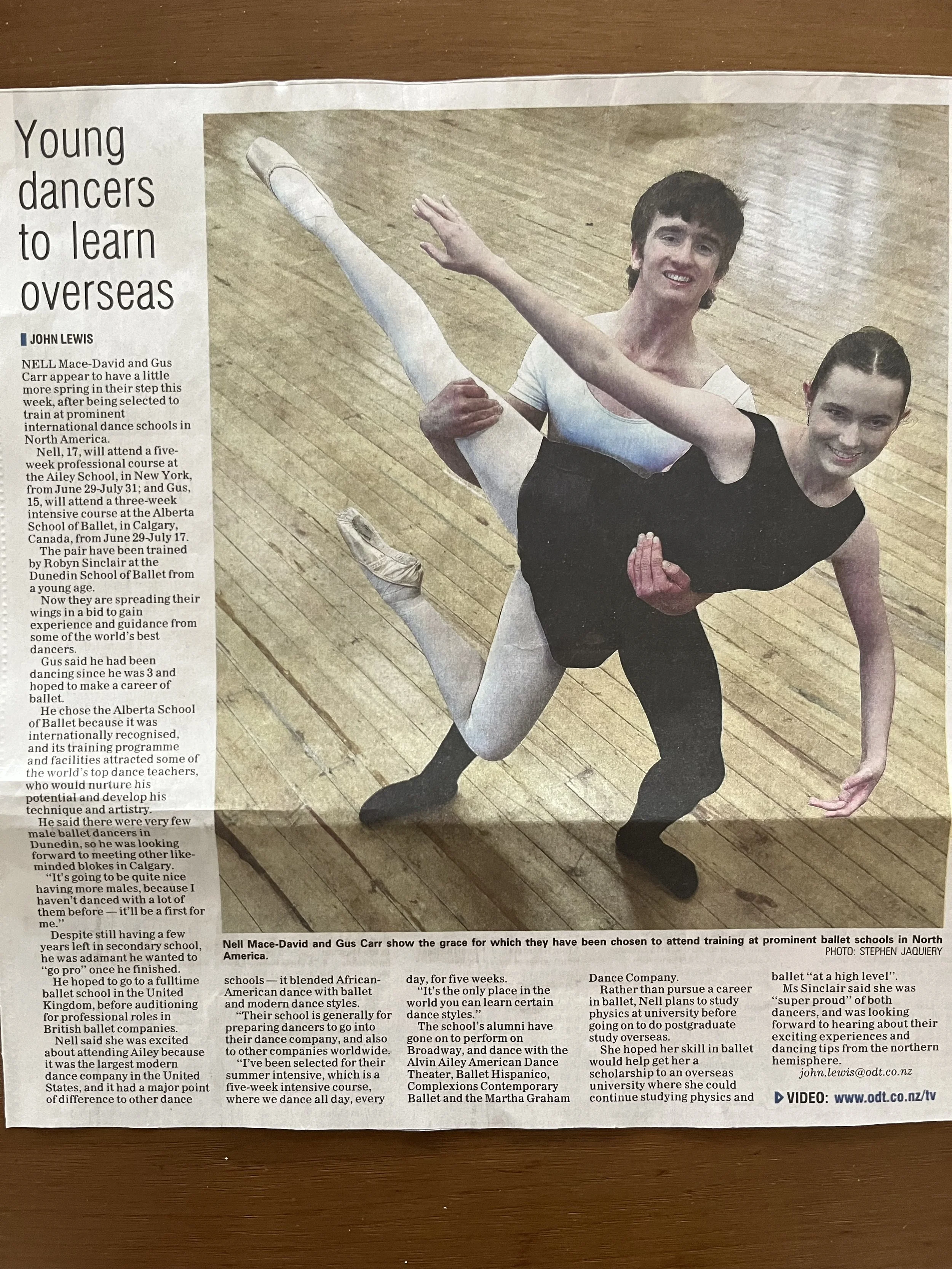
Another amazing Homeschooled girl, Nell Mace-David, has achieved great success in the world of dancing.
Nell who is 17 has been doing ballet from a young age and has now been accepted to go to a 5-week professional summer dance intensive with the Ailey School in New York.
There was an article about Nell, and another student from her ballet school (who is not homeschooled), in the Otago Daily Times.
This is the link to the Daily Times article for those who subscribe: Click here
This is a link to a Facebook post that her ballet school did: Click here
We love hearing about your homeschooling wins, big or small wins, they all count to us. Email details and a photos or links to the article to info@nchenz.org.nz to be included in the next quarterly newsletter.
Record keeping - Now is the time.
With the Ministry considering future additional “accountability measures” for home educators, it is timely for each of us to think about whether and how we keep records and/or assess our children’s learning and progress over time. We were asked how we would do this in our exemption applications, and it is and has always been an expectation that we consistently do so in some suitable way, taking into account our overall approach to home education and our children’s ages and needs. However, life is busy, and when we may never have been asked to show evidence of this, it’s easy for it to slip down the list of priorities or be put aside all together. Now is the time to address this, while we have time and space to do so without pressure.
Record keeping should be a tool that benefits you and your family as you home educate your children, not just a burden that takes up unnecessary time. We don’t need to spent large amounts of time on keeping “pretty” records, but should regularly set aside some time to maintain a functional system that works for us.
The benefits of good record keeping are:
Helps to track your child’s learning and progress – identifying strengths and successes as well as areas of difficulty that may need further guidance.
Can see at a glance when it’s time to order or make new resources.
Aids reflection upon what is working well and what might need changing.
Builds confidence that you ARE “doing enough.”
Having evidence at hand should you have an ERO review or need to provide evidence to the Ministry, making those processes less stressful to prepare for.
Builds a keepsake of your home education journey which you can look back upon later – both for nostalgia and so you can answer your grown children’s questions as they think about homeschooling your grandchildren, or the questions of other parents who turn to you for advice in the future.
There are lots of ways to keep records. The ones you choose should work for you. These may change over time as the seasons of life and seasons of your home education programme change – and that’s ok.
A simple suggestion is this:
Have a folder or binder with sleeves for each child. Routinely drop into it samples of work – a copy of a math page where they did well, a piece of writing, a picture they drew, a photo of a project, an award gained etc.
At the end of each term (or each month of you prefer), look over these with your child and reminisce with your child about what you’ve done over the past term. Together, select sample/favourite pieces to add to a more permanent portfolio for the year.
Also write a short reflection on the term for each child – identifying what they have completed or progress they have made, new things they have mastered, and any areas where they are having difficulty along with what you intend to do to address those. Write about new resources you wish to try, plans you have for the term ahead etc. This reflection is likely to only be a few paragraphs or maybe a page or so long. Add this to the portfolio.
If you choose to use any formal assessments, then add copies of these to the portfolio as well.
At the end of the year, you will have a portfolio that shows your intentional planning and reflections, samples of work and achievement information. Label this by child and year, and shelve it.
There is no need to keep every piece of work a child does – samples are sufficient over the longer term. It can, however, be beneficial to keep everything for the past or current 12 months to be able to show in the event of a review (and also to be able to look back at if your child needs to review a recent concept that hasn’t stuck) – but you can confidently throw away older materials which you are finished with.
NCHENZ has available resources and ideas for record keeping on our website. See here:
Record Keeping the how and why
We Need Your Help
We are trying to create a mailing list of regional groups so when we receive notices for specific areas like balls, camps, classes etc we can pass the information on to the right groups. While we have lots of groups listed on our support groups page many of them are Facebook links which makes it hard to pass the information on. If you attend a homeschool group in your area can you ask the organiser to send us (or you send on their behalf) their contact email. We will not make this email public, this would be for our private mailing list so we can share information when it gets sent to us.
Please send the email address with your group name/ area to localgroups@nchenz.org.nz
Update from the Government Liaison Team
Government Liaison Report
By Cynthia Hancox, Government Liaison
Background
As most of you will be aware, Education Minister Erica Stanford introduced proposed legislation in May, without consultation, that would have allowed the Ministry to set regulations for home educators around reporting, assessment and any other measures they deem necessary now or in the future, and potentially revoke exemptions for non-compliance, even if a family passes an ERO review. For obvious reasons, this was very concerning and the home education community did a stellar job of coming together to write to MPs to voice their concerns, culminating in a gathering at Parliament on 27 th May. After meeting with the Minister and Secretary for Education inside the Beehive, I accompanied her out to announce that she was withdrawing the legislation. Thank you to everyone who contributed!
However, that is not the end of the matter. The Minister intimated at the time that a new Amendment Bill (for the Education and Training Act) was already being drafted and she wanted to look at including legislation around home education in that, but this time with proper consultation. I do not expect that Bill to see the light of day for quite some time, and there is much work to be done in the meantime.
One very positive thing to come out of our meeting in the Beehive was that the Secretary became aware that NCHENZ had previously met regularly with national office Ministry staff members, but that those meetings ceased in 2024 and we have been unable to reestablish them. She decided to facilitate that herself, this time connecting us with senior staff members instead of the most junior ones we typically met with. As a result, we have had several meetings with more planned.
Meetings since then
We met with two General Managers in charge of Operational teams. These are the ones responsible for things like the exemption application forms, the structure of teams for processing applications and dealing with home education matters, the declaration forms etc. This was a very positive meeting, and we plan to meet with them each month for the near future as we work collaboratively around updates to the application form, improving the Ministry’s policies and procedures manual, possible centralising of application processing (and any potential issues around that), digitalising the declarations (but ensuring they are still accessible to those who prefer a non-digital form) and so on.
We went to Wellington and met with the Secretary for Education, and the acting Deputy Secretary. The purpose of this meeting was primarily to “reset” the relationship between NCHENZ and the Ministry. This was also a very positive meeting. The Secretary mentioned that she was thinking about the need to brief incoming Ministers close to Christmas, and so would like to see the above work well advanced by then, and was assured by the acting Deputy Secretary (who also happens to be one of the General Managers we’d met with) that this was in hand. This adds an extra layer of assurance that the proposed meetings will continue, along with the related collaborative work.
The Secretary also proposed facilitating a meeting with ERO so we can engage with them too – as ERO are the other side of the coin when it comes to any future accountability proposals. Similarly, we used to meet regularly with ERO (though less often than the MoE) but this has also fallen away due to staff changes.
Now that our meeting with the Secretary has occurred, I also anticipate we will begin meeting with senior members of the Policy team. These are the folk who are responsible for policy development and any future proposed changes around accountability and, if needed, associated legislation changes.
While in Wellington we also met with Andy Foster, Education Spokesperson for NZ First. He asked some insightful questions and took many notes, proposing that we have further meetings to delve more into various topics raised. He was quite taken aback by the requirements of the exemption application as it stands. He indicated that he will be writing NZF policy around home education and would like our input on that. He asked, among other things, if we could design any future changes so they best fit home educators, as well as providing the Ministry with the assurances they need, what would that look like?
That is exactly what we are and will continue to discuss with both the Ministry and politicians at every available opportunity. In general terms, we are advocating that any changes need to be proportionate, reasonable, properly consulted on, and not too onerous. They must take into account the wide range of ways in which people choose to home educate.
Current view point
In my view, additional accountability can be introduced without legislative changes – and that would be the best approach. They can simply become requirements that sit alongside the allowance – in the same way as they now require us to sign declarations to get the allowance, and require Te Kura students to regularly return work, they could potentially require home educators to, for example, provide an update on their child’s learning programme and progress at certain intervals in order to get the allowance. (And yes, we will be discussing the fact that the allowance itself needs updating).
What the Minister has been proposing is an update at “transition points” – suggested as around 8, 10 and 13 years old. Such updates would provide the Ministry with some assurance that the family is continuing to home educate the child, and continues to have suitable plans and resources for them, and can identify the progress they are making. While the details of what this could look like need further discussion and development, in theory this could be a reasonable option.
Alongside of that, she has proposed increasing funding for ERO reviews to 200 per year, with the intention that reviews would be conducted where family’s updates raise concerns, rather than relying on the current complaints process. As the Ministry noted in the Regulatory Impact Statement for the proposed legislation, most complaints are due to parental conflict rather than genuine educational concerns. In other words, they are often nefarious, and don’t meet the expectation that complaints would be sufficient to identify children who are not receiving a suitable education at home.
While some families prefer to avoid any additional engagement with the Ministry at all, we must face the fact that there will be changes – whether we like them or not – and so our best approach is to work with the Ministry towards ensuring that what comes is as reasonable and workable as possible. This also means proactively proposing solutions that will work for our community while also giving the Ministry what it believes it needs – rather than stubbornly insisting they don’t need anything.
What you can do
When Amendment 583 was before Parliament, many of the MPs voting on it knew little or nothing about home education. They only heard only messaging via media or internal chatter about things like “there are so many people switching to homeschooling – we need to do something about that” and “some home educated children may have been in unsafe environments – so we need to take action” and so on. And they were told how to vote by their parties.
The work that families have done in writing to and meeting with their MPs, and the decisive action we took collectively, has begun to turn the tide on that – helping MPs to see that we are real, diverse families who care about our children and their education. We need to keep up those conversations – doing whatever we can to build relationships with our local MPs and local candidates. It’s an election year – when they are more motivated than ever to engage with their current or potential constituents. It is important to engage respectfully and positively – not in a demanding or ungrateful way. I would encourage you all to consider doing things like sharing your positive personal stories, your children’s successes, and why you value home education. You could do this by writing to your MP/candidates, or, where practical, arranging to meet with them (perhaps you could arrange to do this with a few other families?)
To make this easier, NCHENZ is providing contact details on current MPs and known (so far) candidates. See HERE.
If you are part of organising a local homeschooling group which arranges special events where children showcase their work or take part in organised competitions etc, then please consider whether you might invite a local MP or candidate to attend that event and perhaps give out prizes or similar. I’m thinking particularly of larger annual events (especially those in the next few months) such as science fairs, pet days, home and country shows, athletics days and so on.
In my update in our next newsletter, I will be providing information about home education policy from each significant political party for you to consider before the election.
As always, if you have any questions, comments or concerns, you can reach me at govt.liaison@nchenz.org.nz
WHEN FIRE SAFETY LESSONS SAVE LIVES
Message from Fire and Emergency NZ
While less common, children in New Zealand are still losing their lives to house fires. It’s a sobering reminder that the risk is real especially as we head into winter, when families spend more time indoors and rely on heating, and items like matches and lighters can be within easy reach.
As parents and caregivers, we play a vital role in helping our tamariki understand and respond to these risks.
Fire and Emergency New Zealand offers free Get Firewise and Māui-tinei-ahi downloadable programmes that are easy to use at home. These resources support whānau-led learning and give children practical, life-saving knowledge to help them stay safe.
The programmes help children:
recognise fire hazards in everyday settings
understand the dangers of matches and lighters
know exactly what to do in a fire emergency
Designed to be flexible and engaging, these resources can be woven into everyday home learning through conversations, hands-on activities, and family planning. They work well across a range of ages and can be adapted to suit your child’s learning style.
Families can download these professionally designed resources free of charge from Fire and Emergency New Zealand. In some areas, you may also be able to connect with your local fire station for a visit or presentation to reinforce key messages.
Get Firewise | Fire and Emergency New Zealand
The impact of these programmes is clear. For over 25 years, they have helped reduce fire incidents involving children and young people across Aotearoa. Time and again, families share stories of safe escapes—because their children knew what to do.
They had a plan.
They acted quickly.
Everyone got out.
Fire safety is a practical life skill every child can learn - right at home.
Business Spotlight: Lime Feather Learning
Business Spotlight: Lime Feather Learning
Lime Feather Learning is a unique story of educational innovation, born from one homeschooling mother’s determination to find a flexible, recognised pathway for her children. Shirley Erwee's pressing question is one many Kiwi homeschooling parents share: How do we ensure our children finish secondary school with a recognised credential but without sacrificing the freedom and individuality of home education? When Shirley’s eldest (of six children) approached secondary school age, she discovered the American GED, a high school equivalency credential that aligned beautifully with her family’s eclectic, do‑it‑yourself approach to learning. Affordable, adaptable and free from the rigid structure of traditional school‑leaving exams, the GED offers exactly what many homeschoolers are searching for: No rigid curriculum. No overwhelming workload. Just a practical, flexible pathway that respects the autonomy of homeschooling families.
By pairing the GED with the SAT (a university readiness test), students can achieve University Entrance for all eight universities in New Zealand as well as a multitude of overseas universities. After years of recommending this pathway informally, iun 2016, Shirley was invited to represent an approved online GED study programme — and Lime Feather Learning was born from that.
Benefits for Homeschooling Families
Peace of mind — The GED removes the stress and uncertainty around “How will my child finish secondary school?” Parents gain a clear, recognised pathway without abandoning their preferred style of learning.
Curriculum freedom — Until around age 16, families can use any resources they like. Just weave in Maths, English, Science, and Social Studies skills along the way. Anytime after age 17, students are eligible to sit the four exams. No deadlines.
A proven route to future opportunities — Whether students pursue university, trades, or entrepreneurship, the GED provides a solid, internationally respected credential.
Support from people who understand homeschooling — Lime Feather Learning has guided countless students and families, offering practical advice based on a deep understanding of the many nuances of home education.
Shirley’s own children have taken diverse paths, from university degrees to entrepreneurship and hands‑on trades, reflecting the very flexibility Lime Feather Learning champions. With almost 30 years of lived home education experience and a proven track record, Lime Feather Learning continues to empower New Zealand families with a practical, confidence‑building route to a school‑leaving certificate that fits real life. Enquiries are welcome.
Contact details
Website: https://limefeatherlearning.com
Email: info@limefeatherlearning.com
Tel 022 687 4083

MATHS WEEK/WIKI PANGARAU 2026



Maths Week is a major event that is held each year. Sponsored by the Ministry of Education and the New Zealand Association of Mathematics Teachers, resources that support the mathematics and statistics curriculum and made available to teachers and students in Years 1 – 11. Maths Week resources are free.
The aims of Maths Week are:
To encourage students’ interest in mathematics and statistics
To give teachers resources that they can use in the classroom, particularly material that requires some research and which may not be readily available
To show the pleasure that mathematics can provide and some of the everyday places where mathematics and statistics can be used
To give teachers material that can provide extension.
Maths Week 2026 will be held between Monday 10 August and Friday 14 August.
Registrations opened on Monday 22 June. To register, go to https://www.mathsweek.co.nz /forteachers
Detailed information about Maths Week, including the registration process, the nature of the resources, how to access them and when they can be accessed, and what’s new for 2026 can be found at https://www.mathsweek.co.nz/forteachers. Teachers, including those who are familiar with Maths Week, are encouraged to read this important information.
Hillary Outdoors - Duke of Edinburgh Award
Are you participating in the Duke of Edinburgh Award. It can be quite a juggle logistically and especially financially for families to commit to the award.
Did you know that Hillary Outdoors offers Bronze and Gold/Silver Adventurous Journey Camps where participants can achieve their training, practice and qualifying journeys in one camp.
Below are our scheduled Adventurous Journey Camps for 2026/start of 2027
Bronze Adventurous Journey | 13-17 Dec 2026 | Tongariro
Gold/Silver Adventurous Journey | 12-18 Dec 2026 | Tongariro
Gold/Silver Adventurous Journey (sea kayak) | 10-16 Jan 2027 | Coromandel
It’s also worth knowing that financial support is available, for those in need, through the Hillary Step Scholarship to help offset the cost of a Hillary Outdoors Camp.
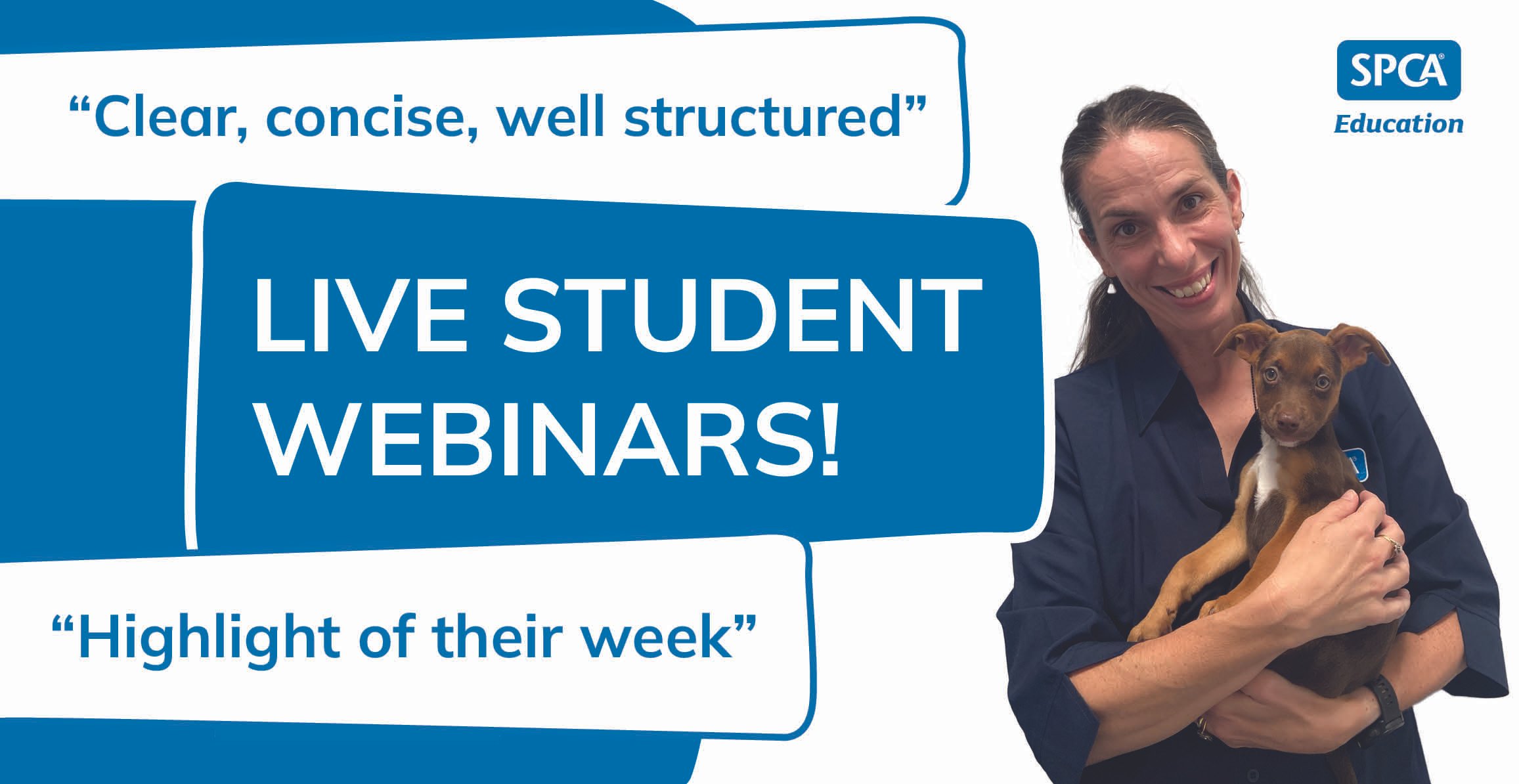
SPCA Live Student Webinars – Term 3 2026
Join Christy, one of SPCA’s experienced educators, for a series of live, interactive webinars designed for primary and intermediate learners.
These engaging 30-minute Zoom sessions explore the role of SPCA in the community, what animals need to be happy and healthy, and how young people can help animals in need.
Each term includes four different webinar topics, with multiple session times available to suit your schedule. To support learning, pre- and post-webinar activities are available.
Spaces are limited to ensure an interactive experience, so get in quick!
Register here: https://teachers.spcaeducation.org.nz/live-education-webinars/
Donations
Membership to NCHENZ is free and has been for many years so that the organisation is available to every NZ home educator - but we do rely on donations to keep the [virtual] lights on. If you are in a position to make a donation to NCHENZ please consider doing so. We suggest $25/family for the year, but you may pay more or less (or nothing at all), your membership will continue regardless.
Our account details are: Kiwibank 38-9014-0162108-00 Account name: National Council of Home Educators New Zealand
Include Reference: “donation” and if you wish you can include your last name and NCHENZ membership number

© 2026 National Council of Home Educators New Zealand . All rights reserved. This newsletter is for members only and may not be reproduced without prior permission.
About NCHENZ
The National Council of Home Educators NZ (NCHENZ) has been an Incorporated Society since 1998, dedicated to supporting and advancing home education across Aotearoa NZ at a national level.
We are the nationwide homeschooling body in NZ representing all home educators, and we hold a strong commitment to neutrality. As per our Constitution, we do not endorse or promote any particular political, religious, educational, parenting, or socio-economic philosophy or methodology. Our focus is on creating an inclusive environment where all members, regardless of their cultural background or beliefs, feel welcomed and respected.
We have had zero membership fees for many years to ensure that the organisation is accessible to the entire homeschooling community, regardless of personal circumstances.
Email us on info@nchenz.org.nz